
Best Equipment Rental Software for European Dealers (2026)
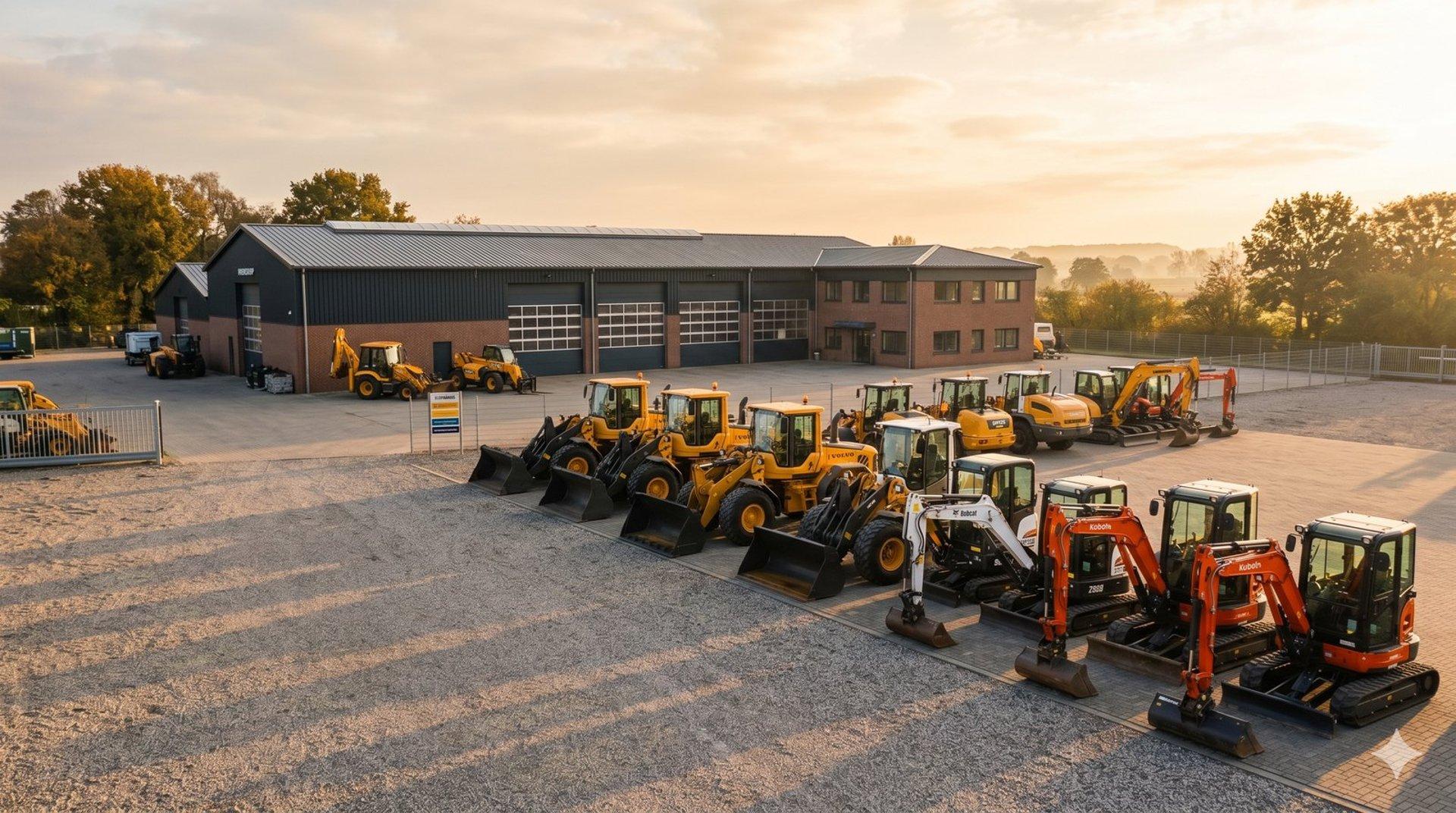
If you run a rental fleet out of spreadsheets, you already know the feeling. A customer calls to ask whether the five-tonne excavator is free next Tuesday, and you can't answer without flicking between three tabs, a wall planner, and a text message from your yard foreman. By the time you've pieced it together, the machine has either been promised to two people — or to nobody, and it sat idle all week.
Rental is supposed to be the steady, high-margin side of a dealer's business. Done well, it smooths out the lumpiness of used-equipment sales and keeps cash coming in between deals. Done on spreadsheets, it quietly bleeds money: idle machines nobody flagged, contracts that ran two weeks long without anyone re-invoicing, deposits never chased, damage never billed back. The software you choose to run rental on is the single biggest lever you have over whether it becomes a profit centre or a permanent headache.
This is a buyer's guide for European dealers evaluating equipment rental software in 2026 — what to look for, what to ignore, and the questions that separate a real fit from a slick demo.
What rental software actually has to do
Strip away the feature lists and there are only a handful of jobs a rental system must do well. If a tool is weak on any of these, no amount of dashboards will save you.
1. A live, trustworthy view of every machine
You should be able to answer "is it available, and when?" in one screen, for any unit, without phoning the yard. That means an availability calendar where every machine shows a clear status — on rent, reserved, available, or in for service — and where a booking blocks the asset automatically so you can't double-book it. This sounds basic. It is the thing spreadsheets fail at most often, because two people editing the same sheet is how double-bookings are born.
2. Contracts, deposits and re-invoicing without re-keying
A rental contract is not a one-off invoice. The machine goes out, the clock runs, the period extends, fuel and transport get added, a deposit is held and then returned, damage gets billed back. Good software generates the contract, tracks the running period, and lets you re-invoice an extension in seconds — pulling the customer, the rate and the asset history forward instead of making you re-type them. Every manual re-key is a chance to undercharge.
3. Utilisation you can actually see
Here is the number most dealers can't produce on demand: what percentage of the time is each machine actually earning? Say you have a wheel loader that cost you €120,000. At a day rate of €240, the difference between 45% time utilisation and 70% is roughly €22,000 a year on that single unit. Across a fleet of thirty mixed machines, the gap between "we think it's fine" and "we measure it weekly" is easily six figures. Rental software that can't show you utilisation per machine, per category and per branch is hiding your most important decision from you.
The European checklist most tools fail
Plenty of capable rental products were built for the North American market and bolted Europe on afterwards. For a dealer in Poland, Germany, France or the Nordics, that shows up fast in the places that matter:
- VAT done properly — not a single tax rate, but correct handling across rates and categories, and the reverse-charge logic that cross-border B2B rental actually requires.
- EUR and multi-currency — and the ability to quote and invoice a customer across a border without a spreadsheet workaround.
- Multi-language — contracts and customer-facing documents your German and Polish customers can read, generated from the same record.
- Fit with European marketplaces — the ex-rental machine you decide to sell should flow to Mascus, OTOMOTO, MachineryZone or Agriaffaires without being re-entered by hand.
If a vendor can't speak fluently to VAT and cross-border on the first call, assume those gaps become your problem at quarter-end.
The hidden cost of running rental and sales as separate islands
Most dealers don't only rent. You sell, you rent, and you service — often the same machine across its life. A unit comes in on trade, goes out on rent for a season, comes back through the workshop, then sells used. When rental lives in one tool, the workshop in another and sales in a third, nobody owns the full picture of any machine. You lose the thread on total cost, on what a unit has actually earned, and on when "keep renting it" quietly became "should have sold it last spring."
This is the real argument against buying a standalone rental tool just because it demos well. A point solution solves one workflow and creates two new seams — the re-keying between systems, and the reporting that never quite reconciles. Before you sign, ask the harder question: not "is this good rental software?" but "does this give me one source of truth across sales, rental and workshop, or am I about to maintain three?"
Where AI changes the maths
The newest shift in 2026 is that the busywork around rental is increasingly something software does for you rather than something you supervise. The practical wins are unglamorous and real: flagging a contract that's about to run past its end date before you forget to re-invoice it, surfacing the machine that's been idle three weeks while a similar unit turns away demand, drafting the customer follow-up, and pulling the answer to "what did this loader earn last year, net of repairs?" out of the record instead of out of your head. AI built into the workflow — rather than a separate chatbot bolted on the side — is what turns a system of record into something that actively protects your margin.
How to run the evaluation
Keep it simple. Take your three most-rented machines and one awkward cross-border deal, and make each vendor run them end to end in the demo: book it, extend it, add transport and a deposit, invoice it with correct VAT, then show you utilisation for the month and the machine's lifetime earnings. The tool that handles your real cases — not the canned demo data — is the one to shortlist. And weigh heavily whether it stands alone or connects rental to the rest of your yard.
That last point is where Stalmio comes at it differently. It's an AI-native operating system built for European heavy-machinery dealers, with sales, rentals and workshop on one source of truth — so a machine's rental history, service record and sale all live on the same file, VAT and multi-language are built in rather than bolted on, and one click syndicates an ex-rental unit to Mascus, OTOMOTO, MachineryZone and Agriaffaires. If you're evaluating rental software this year, it's worth asking not just which tool runs rental best, but which one means you never have to buy the next three tools to go with it.