
Equipment Rental Rate Cards: How to Price to Protect Margin
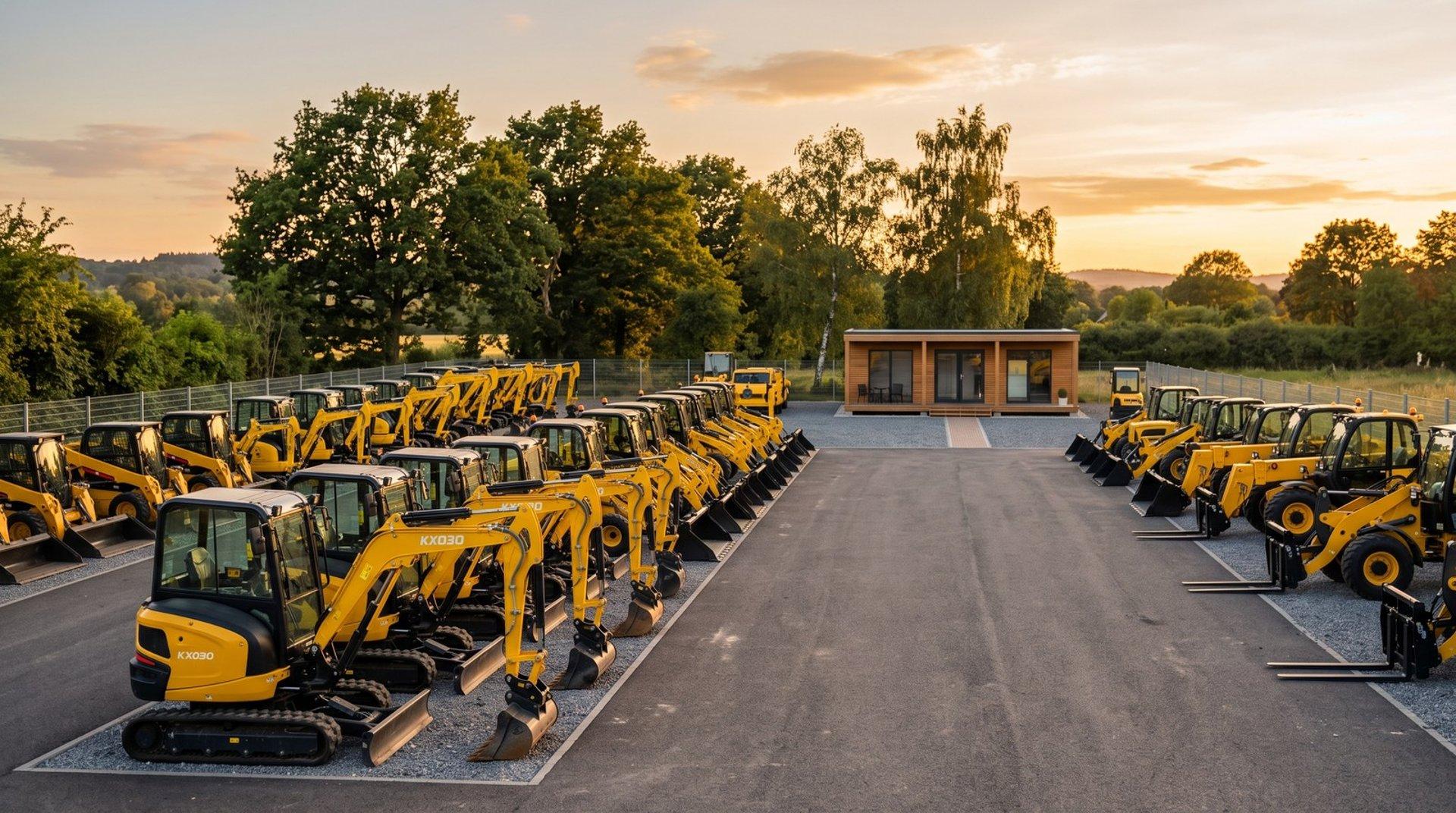
Every rental dealer has lived this moment. A regular customer calls, asks for the 5-tonne excavator for ten days, and you quote a number off the top of your head. It feels fair. It feels fast. Three months later you discover that machine earned less than its financing cost.
Pricing by gut is the most expensive habit in equipment rental. Here is a practical way to replace it with a rate card your whole team can use.
The real cost of ad-hoc quoting
Take a mid-size dealer with 40 rental machines and an average list rate of 150 EUR per day. If informal discounts and forgotten extras (transport, fuel, cleaning, damage waiver) leak just 8 percent of revenue, that is roughly 12 EUR per machine per day. Across 40 machines at 55 percent utilization, you lose around 105,000 EUR a year. No one notices because each single quote looks reasonable.
The problem is not generosity. It is that every salesperson prices differently, and nobody can see the pattern.
What a good rate card contains
A rate card is more than a daily price. A usable one has these layers:
- Base rates per period. Daily, weekly, and monthly rates, plus a weekend rate if your market uses one.
- Duration breaks. A weekly rate of 3.5 to 4 times the daily rate and a monthly rate of 2.5 to 3 times the weekly rate are common starting points.
- Usage allowance. Included hours per day or week, with a clear overage rate per engine hour.
- Standard extras. Delivery and collection, operator, fuel policy, cleaning, insurance or damage waiver, and attachments.
- Deposit and minimum charge. Short rentals still cost you a delivery, an inspection, and paperwork.
Set rates from cost, not from the competitor down the road
Start with the machine's true monthly cost: depreciation or financing, insurance, scheduled service, expected repairs, storage, and admin. Divide by the days you realistically expect it to be on rent, not the days in the month. Then add your target margin. A machine at 50 percent utilization needs a daily rate nearly double what the same machine needs at 90 percent.
Competitor rates are a sanity check, not a starting point. If the market rate is below your break-even, that machine is a poor rental candidate and may be better sold.
A simple framework: floor, target, ceiling
For every machine class, define three numbers.
- Floor. The lowest rate that still covers cost plus a minimum margin. Salespeople can go here without asking.
- Target. The standard card rate, used for most quotes.
- Ceiling. The peak-season or short-notice rate when utilization is high and stock is tight.
The point is to make discounts a decision with a boundary, not a negotiation with no edges. Anything below floor needs a manager's approval and a reason.
Let utilization drive the card
Static rate cards go stale. Review utilization by machine class every month. If a class sits above 75 percent for two months, raise the target by 5 to 8 percent. If it sits below 40 percent, do not just cut price. First check whether the machine is in the wrong location, wrongly priced for its duration mix, or simply surplus to your fleet.
Watch two numbers together: time utilization (days on rent divided by available days) and financial utilization (revenue divided by what the machine would earn at card rate for every available day). Time utilization can look healthy while financial utilization is poor, which means you are renting the machine out too cheaply.
Common mistakes
- Treating transport as free to win the job, then absorbing 80 to 200 EUR per round trip.
- Quoting the daily rate for a four-week hire.
- Ignoring VAT and currency details on cross-border rentals, which changes what the customer actually sees as the price.
- Letting the rate card live in a spreadsheet nobody updates, while quotes are written in email threads.
- Never reviewing the discounts actually given against the card.
Making it stick
A rate card only protects margin if it is applied at the moment of quoting. That means the card, the machine's availability, and the customer's history need to be in the same place. When a salesperson has to open three files to price one job, they will guess.
This is where a unified system earns its keep. In Stalmio, rate cards live inside the Rentals module next to utilization reporting, so the quote starts from the card, flags anything below floor, and shows how each machine class is performing. Because rentals, sales, and workshop share one machine file, the repair costs that should shape your rates are already there. If you want to see how your current pricing compares to your real utilization, we are happy to walk you through it.