
How to Sell Used Heavy Equipment Online in Europe (2026 Playbook)
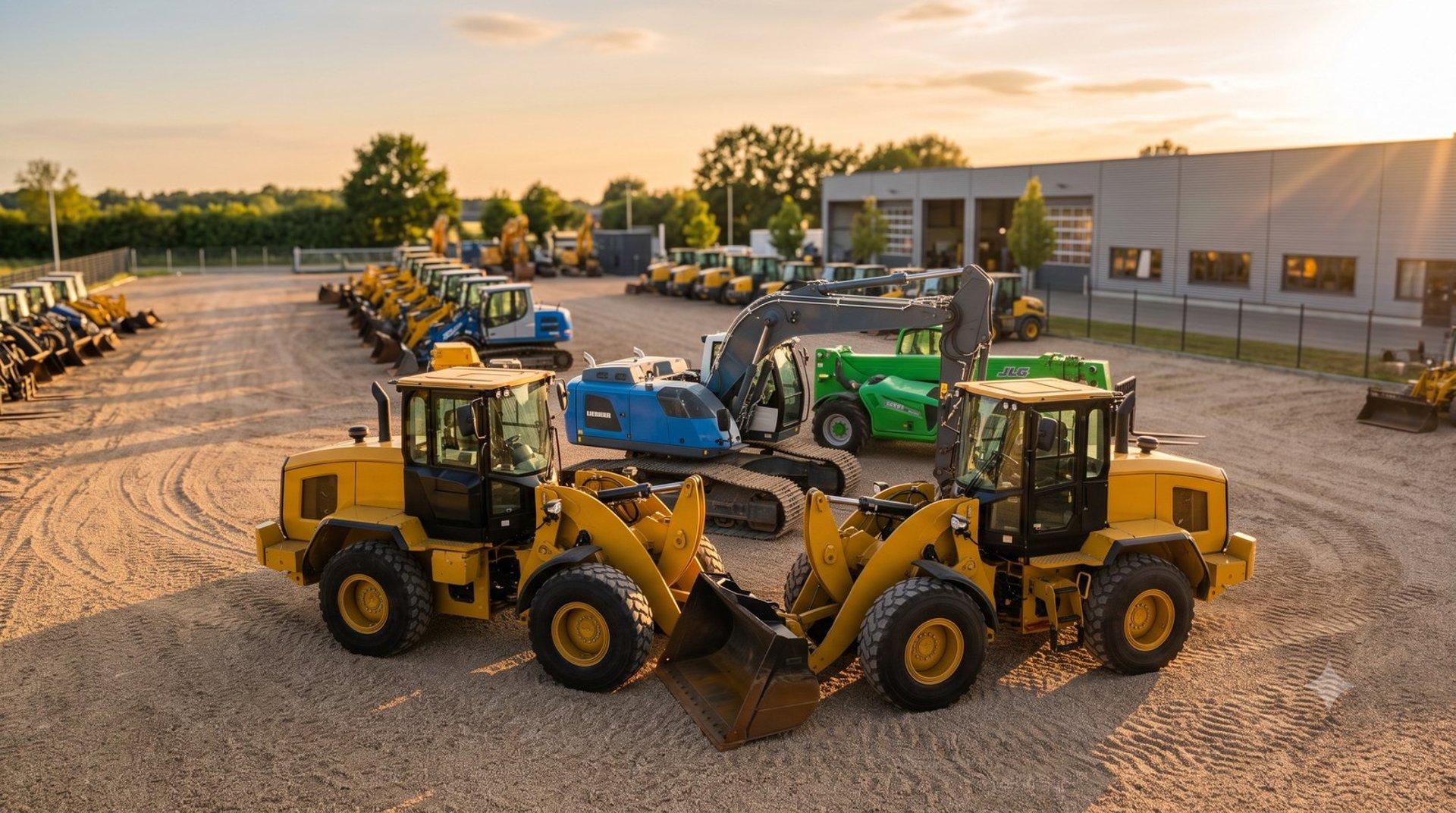
Every used machine on your lot runs two clocks at once. The first is the market — the price a comparable excavator, telehandler, or wheel loader will fetch this quarter. The second is carrying cost: the interest on the capital tied up in the unit, the yard space it occupies, and the quiet erosion of its value as newer stock lands and the hour meter climbs. The longer a machine sits, the more the second clock eats into whatever the first one promised. Selling used equipment online in Europe is, at heart, a race between those two clocks — and most dealers run it with one shoe untied.
The real cost of a machine that sits
Dealers obsess over sale price and under-count the cost of time. A €90,000 used loader that takes 120 days to sell instead of 45 isn't just "sold a bit late." Assume roughly 8% annual carrying cost between financing, insurance, and yard overhead, and every extra month costs you around €600 on that one unit — before a single euro of price erosion. Add the reality that a machine depreciates while it waits, and a 75-day delay can quietly cost 3–5% of the sale value. Across a lot of twenty aging units, slow listings are a five-figure leak that never shows up as a line item.
The leak is rarely the price. It's the listing process. A machine that goes live three weeks after it's ready, appears on one marketplace instead of four, carries eight dark phone-shot photos, and repeats the same three specs buyers ignore is competing with both hands behind its back.
Where European buyers actually look
A buyer in Lyon, Poznań, or Rotterdam does not start on your website. They start on the marketplace they trust, and those differ by country and by category. Construction buyers gravitate to Mascus and MachineryZone, agricultural buyers to Agriaffaires, and in Poland an enormous share of search traffic runs through OTOMOTO. No single channel reaches the whole continent. If you list on one, you're fishing one pond while your competitor casts across four.
But marketplaces are rented land. They set the rules, own the buyer relationship, and put your unit next to ten near-identical ones sorted by price. Your own storefront — a clean, indexed inventory page on your domain — is the land you own. The winning pattern in 2026 isn't marketplace or website. It's your storefront as the source of truth, syndicated outward to every marketplace where your buyers already are.
A five-part framework for a listing that sells
Whether you sell one machine a month or fifty, the same fundamentals move a unit from "listed" to "sold":
- Presentation. Twelve to twenty photos in daylight, machine clean, from consistent angles: full profile, cab interior, hour meter, undercarriage or tyres, engine bay, and any wear or damage shown honestly. Hiding a scratch costs you the buyer's trust at inspection. Showing it filters out tyre-kickers and speeds the ones who are serious.
- Specification depth. Year, hours, and price are table stakes. Serial number, configuration, attachments included, service history, and country of first registration are what a cross-border buyer needs before they'll load a truck.
- Reach. The same listing, live simultaneously on every relevant marketplace and your storefront, not a staggered rollout that leaves channels stale.
- Trust. A clear VAT status, an honest condition report, and a fast, human reply to the first inquiry. In used equipment, response time is a conversion lever as strong as price.
- Consistency. When the machine sells or the price drops, every channel updates the same day. Nothing burns a buyer's confidence faster than calling about a unit that sold last week, or worse, agreeing a price you already cut elsewhere.
The cross-border advantage most dealers leave on the table
Europe's fragmentation is a headache and an opportunity. A machine that's slow to move in a saturated German market may be exactly what a contractor in Romania or the Baltics is hunting for. The dealers who win are the ones who make cross-border sale easy for the buyer: listings and specs in the buyer's language, prices legible in euros, and VAT handled correctly for an intra-EU B2B sale so the buyer isn't guessing whether they'll be double-taxed.
This is where tooling built for the American or purely domestic market quietly fails European dealers. Multi-language listings, EUR pricing, and correct VAT treatment aren't nice-to-haves on this continent. They are the difference between a listing a Slovak buyer trusts and one they scroll past. (Confirm the specifics of any cross-border VAT treatment with your accountant, since the rules turn on registration and documentation.)
Why the manual approach breaks
Here's the trap. Doing all of the above by hand means entering the same machine four or five times, once per marketplace and once on your site, each with its own form, photo uploader, and quirks. So dealers cut corners: they list on one or two channels, let details drift, and forget to pull the ad when the unit sells. The framework is sound — the manual execution is what fails, because nobody has the hours to re-key twenty machines across five platforms every week.
The fix is structural, not heroic. Enter each machine once, into one system that treats that record as the source of truth, and let it push complete, translated, correctly-priced listings out to every marketplace with one click, then pull them back the moment the unit is sold. Photos, specs, price, and VAT flow from a single record, so consistency stops being a discipline problem and becomes the default.
Bringing it together
This is exactly the problem Stalmio was built for. It gives European heavy-equipment dealers one source of truth for every machine and one-click syndication to Mascus, OTOMOTO, MachineryZone, and Agriaffaires alongside your own storefront, with EUR pricing, multi-language listings, and EU VAT handled natively, plus AI that drafts listing copy and qualifies the inquiries those ads generate. Because sales, rentals, and the workshop live in the same system, a machine that isn't selling can flip to the rental fleet without re-entering a thing. Enter it once, sell it everywhere, and stop letting the second clock win.