The Growth Engine: How Modern European Dealers Unify Their Yard to Stop Leaving Revenue on the Table
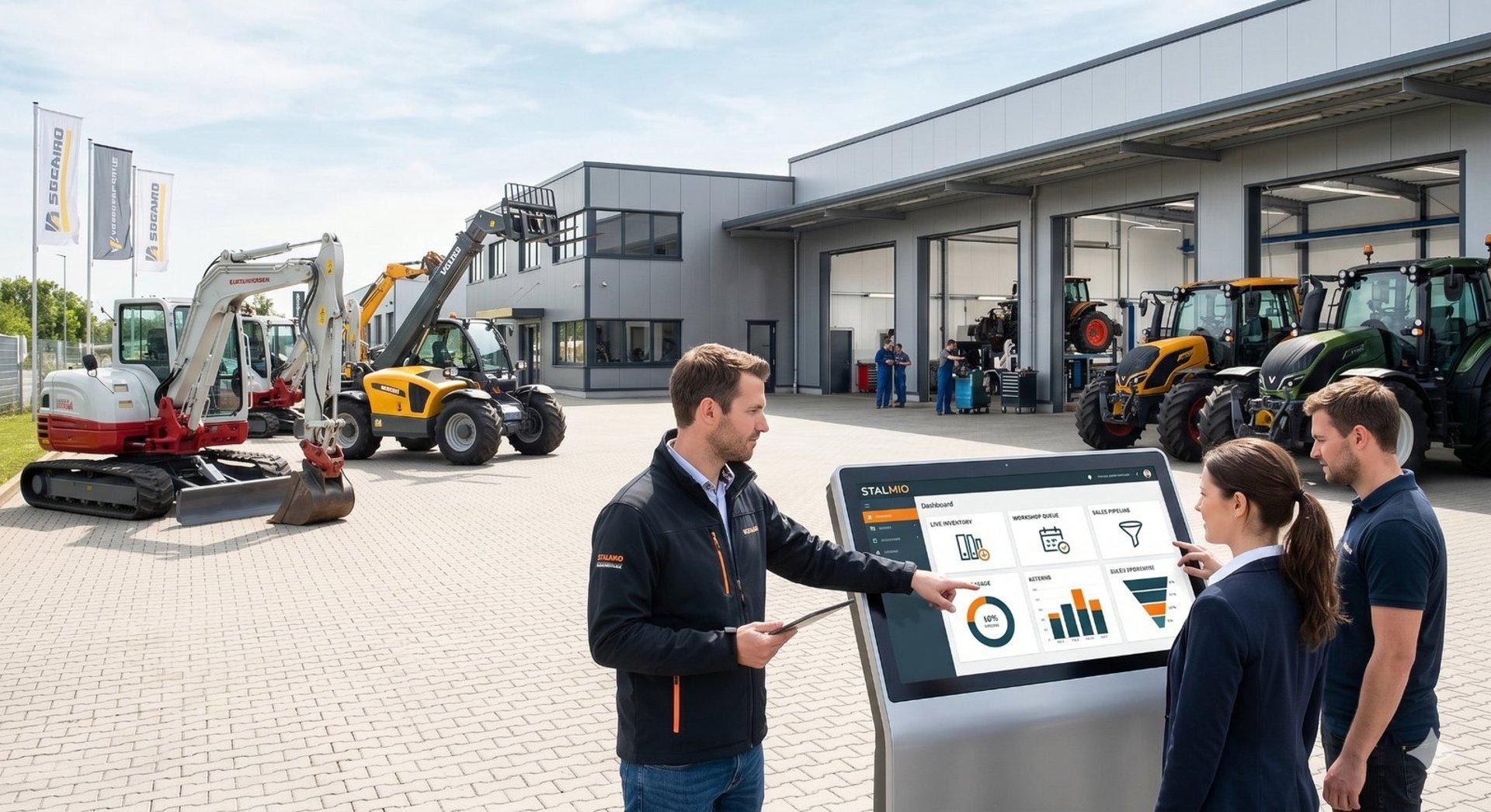
The morning fog was still lifting off the gravel, but Thomas was already on his third espresso, staring at a dashboard covered in missed targets. As the managing director of a multi-location construction and agricultural equipment dealership in Western Europe, he knew the numbers by heart, but looking at them never got easier.
The yard outside was packed with millions of Euros in iron—crawler excavators, telehandlers, and high-horsepower tractors. Demand in the European secondary market was soaring, yet his net margins were tightening, squeezed by rising operational costs and supply chain complexities.
"We aren't losing deals because we lack inventory, Thomas," his operations manager, Elena, said as she walked into the office. "We’re losing them because our workshop, sales team, and logistics aren't talking to each other."
She was right. The dealership was running on a patchwork of disconnected software, localized spreadsheets, and frantic WhatsApp groups. They were trying to fuel a modern, cross-border business with an outdated engine.
The Cost of the Disconnected Yard
Later that morning, Thomas watched a familiar scene play out. A major infrastructure contractor called looking for a late-model 20-ton excavator for a project starting next week. The sales rep checked their legacy ERP. It showed zero availability across their regional depots. The customer thanked him and hung up, likely calling a competitor across the border.
Ten minutes later, Thomas walked out to the service workshop. There, sitting right in the back of the yard, was the exact excavator the contractor wanted. It had been returned from a leasing contract two weeks ago, fully inspected, and detailed. But because the workshop's technician reports and safety certifications hadn't been processed by the back office, the sales team had no visibility.
This wasn’t an isolated incident; it was a daily tax on their growth:
- The Invisible Pipeline: Sales reps spent hours chasing machine status updates instead of closing deals with active buyers.
- The Workshop Bottleneck: High-margin used machinery sat idle in the yard because workshop preparation, parts ordering, and sales lived in completely separate worlds.
- High-Friction Transactions: Closing a cross-border deal or multi-unit rental required endless phone tags, manual VAT checks, and physical paperwork.
Thomas realized they were leaving thousands of Euros on the table every week, not from a lack of market demand, but from a lack of operational clarity.
Firing Up an Intelligent Operating System
That afternoon, Thomas and Elena decided to move away from fragmented generic software and legacy systems. They needed a platform purpose-built for the heavy machinery industry—an intelligent, unified operating system designed to run sales, rentals, and workshop operations on a single dashboard.
Instead of replacing their core financial accounts, this modern platform sat right on top of their business, turning chaotic yard data into real-time, actionable insights.

The transformation across their European branches was immediate.
1. Live Inventory and Pipeline Control
With specialized equipment CRM functionality, the sales team stopped operating on guesswork. Whether a machine was at a depot in France, Germany, or Poland, reps had immediate visibility into its exact status. They could see what was available now, what was currently out on hire, and what was arriving next month, allowing them to pre-sell inventory with absolute confidence.
2. Seamless Workshop and Refurbishment Workflows
The moment a machine rolled back into the yard, the change was logged instantly. The platform automatically triggered workshop work orders for inspection, servicing, and cleaning. Sales reps could track the real-time progress (e.g., “In Inspection,” “Awaiting Parts,” “Certified for Sale”). The black hole vanished, and machinery prep times dropped from weeks to days.
3. Frictionless Sales and Rental Operations
Instead of forcing customers to wait days for complex, multi-currency quotes or transport estimates, the platform streamlined the entire ordering and fulfillment process. Digital quoting, instant availability checks, and integrated workflows meant a complex heavy equipment deal could be configured, approved, and sent straight to a customer's mobile phone in minutes.
The Fuel for Scalable Growth
Three months later, Thomas stood in the same office, looking at a radically different operation. The missed opportunities had been replaced by record-high conversion rates, shorter machinery turnaround times, and significantly higher utilization rates for their rental fleet.
By unifying their sales, rentals, and workshop operations into a single intelligent workflow, they hadn't just plugged the leaks in their revenue—they had unlocked an entirely new gear of productivity. The service team knew exactly which high-demand machines to prioritize, the sales team had total confidence in their yard data, and the business could scale seamlessly across regions.
The iron in the yard wasn't just sitting there anymore. It was moving.
"We finally stopped fighting our own internal processes," Elena smiled, watching a newly prepped delivery truck leave the gates.
For modern machinery dealers, growth isn't about working longer hours; it’s about connecting your yard, automating your workshop, and capturing every piece of revenue the market offers. When the operational engine is unified, the business is built to lead.